How Adaptive Algorithms Reshape Promotion Distribution Across Slot and Table Game Ecosystems in Portable Formats
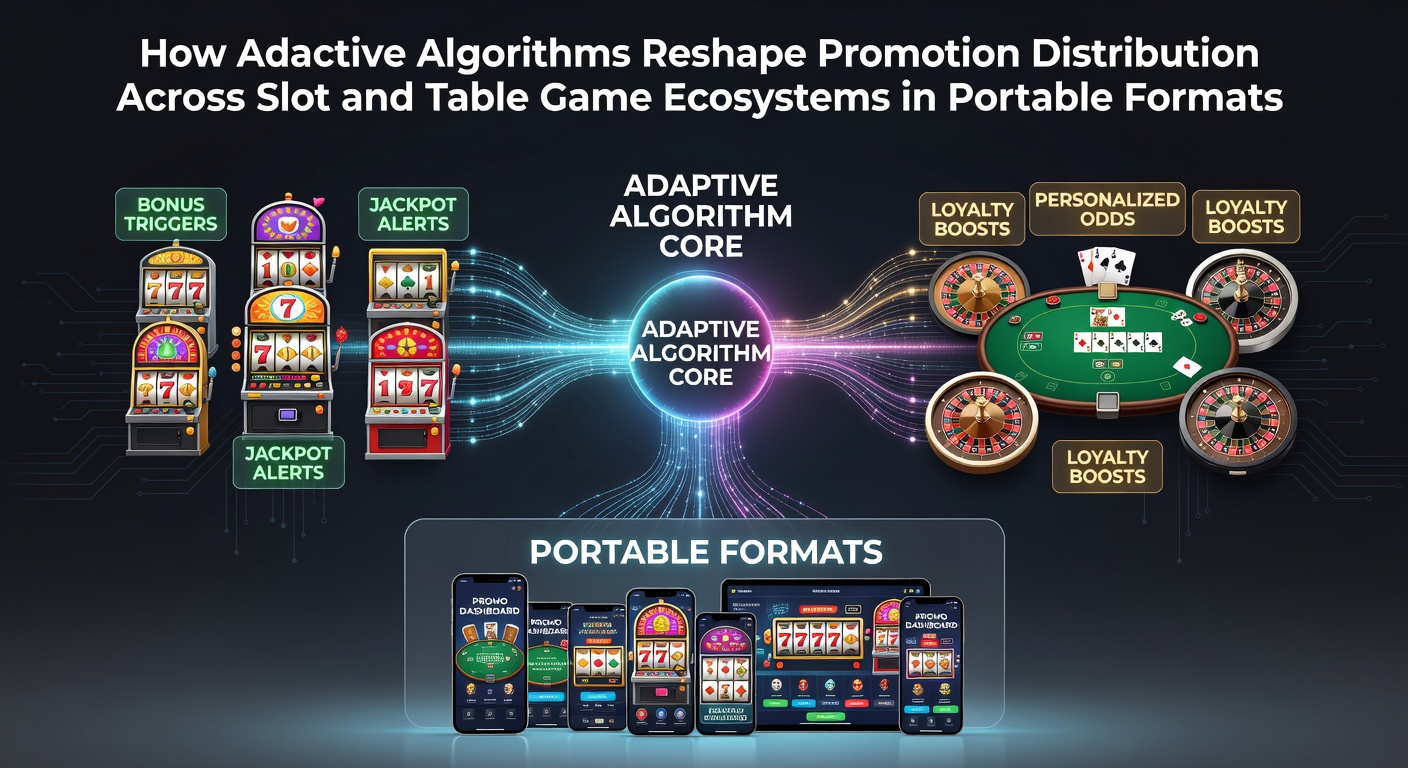
Adaptive algorithms now drive promotion distribution in mobile slot and table game platforms by analyzing player behavior patterns in real time, and operators use these systems to allocate bonuses across portable formats where user sessions often last under fifteen minutes. Data from device sensors, session duration, and past wager history feed into models that adjust offer frequency and type without manual intervention from marketing teams.
Core Mechanisms Behind Algorithmic Allocation
Machine learning frameworks segment users into clusters based on engagement metrics such as spin velocity and table game decision speed, while predictive scoring ranks the likelihood that a specific promotion will extend playtime in that session. These clusters receive tailored incentives where slot players might see free spin bundles timed to volatility preferences, whereas table game participants encounter wager-match credits aligned with their average bet size per hand.
Operators integrate these models through APIs that connect directly to mobile app backends, and updates occur continuously as new behavioral data arrives during live play. In June 2026 several North American platforms reported expanded testing of reinforcement learning variants that optimize promotion timing to reduce churn during peak commuting hours.
Slot Ecosystem Adjustments
Slot libraries on mobile devices present unique distribution challenges because reel configurations and payline counts vary widely, yet adaptive systems map promotion types to individual game mathematics so that multipliers or bonus round entries land in titles matching a player's historical return-to-player tolerance. When a user shifts from high-volatility titles to lower-variance options, the algorithm recalibrates the next offer within seconds and surfaces it on the next spin sequence.
Figures from the Nevada Gaming Control Board show mobile slot promotions accounted for forty-three percent of total bonus volume in the first half of 2026, with algorithmic targeting cited as the primary driver behind that share. One study released by the University of Nevada, Las Vegas examined three major operators and found that personalized free-spin grants increased average session length by twenty-two percent compared with static campaign schedules.
Table Game Promotion Dynamics
Live dealer and RNG table games introduce additional variables because decisions occur at irregular intervals and house-edge differences between variants remain significant. Algorithms therefore weigh factors such as average decision time per hand, side-bet frequency, and table-hopping behavior to determine whether a player receives a cashback credit or an instant wager match. This approach allows distribution across blackjack, roulette, and baccarat interfaces without requiring separate campaign logic for each vertical.

Canadian provincial data from iGaming Ontario indicates that table game bonus redemptions on mobile rose eighteen percent year-over-year through May 2026, coinciding with wider deployment of decision-tree models that adjust offer value based on real-time bankroll velocity. Observers note that these models also cap exposure on high-edge side bets to maintain regulatory compliance across jurisdictions.
Portable Format Specifics
Portable environments add layers of complexity through variable network conditions, battery states, and screen-size constraints that influence how promotions render and when they appear. Algorithms incorporate device telemetry to delay or compress offers during low-bandwidth moments, while push-notification logic prioritizes users whose location data suggests they are in low-distraction settings such as transit or home. Cross-device continuity ensures that an unfinished slot session on a smartphone resumes on a tablet with the same personalized promotion queue intact.
Industry reports from the Australian Communications and Media Authority highlight that mobile-first operators reduced promotional spam complaints by thirty-one percent after implementing context-aware throttling in early 2026. These systems rely on edge-computing nodes that process signals locally before syncing with central servers, thereby preserving responsiveness even when connectivity fluctuates.
Regulatory and Data Considerations
Jurisdictions continue to refine rules around algorithmic transparency, and several require operators to maintain audit logs that document how promotion decisions were reached for each account. In practice this means storing feature vectors and model version identifiers alongside every bonus issuance so that regulators can reconstruct the logic path if disputes arise. Platforms operating across multiple regions therefore maintain separate model instances tuned to local fairness standards while sharing core behavioral datasets under anonymized protocols.
One analysis published by the Malta Gaming Authority in spring 2026 examined twenty licensed mobile operators and confirmed that adaptive systems consistently applied spend-limit checks before surfacing any offer exceeding a preset percentage of a user's recent deposit activity. Such safeguards integrate directly into the allocation pipeline rather than functioning as post-hoc filters.
Conclusion
Adaptive algorithms have become integral to promotion distribution across slot and table game ecosystems in portable formats by processing behavioral signals at scale and delivering context-specific incentives without constant human oversight. Continued refinement of these models depends on regulatory clarity around data usage and on technical improvements in edge processing that keep offers responsive under variable mobile conditions. Operators that maintain transparent logging and jurisdictional tuning appear positioned to sustain compliance while scaling distribution efficiency as portable gaming volumes grow through the remainder of 2026.