How Seasonal Event Integrations Alter Participation Rhythms in Mobile-Enabled Virtual Gaming Spaces
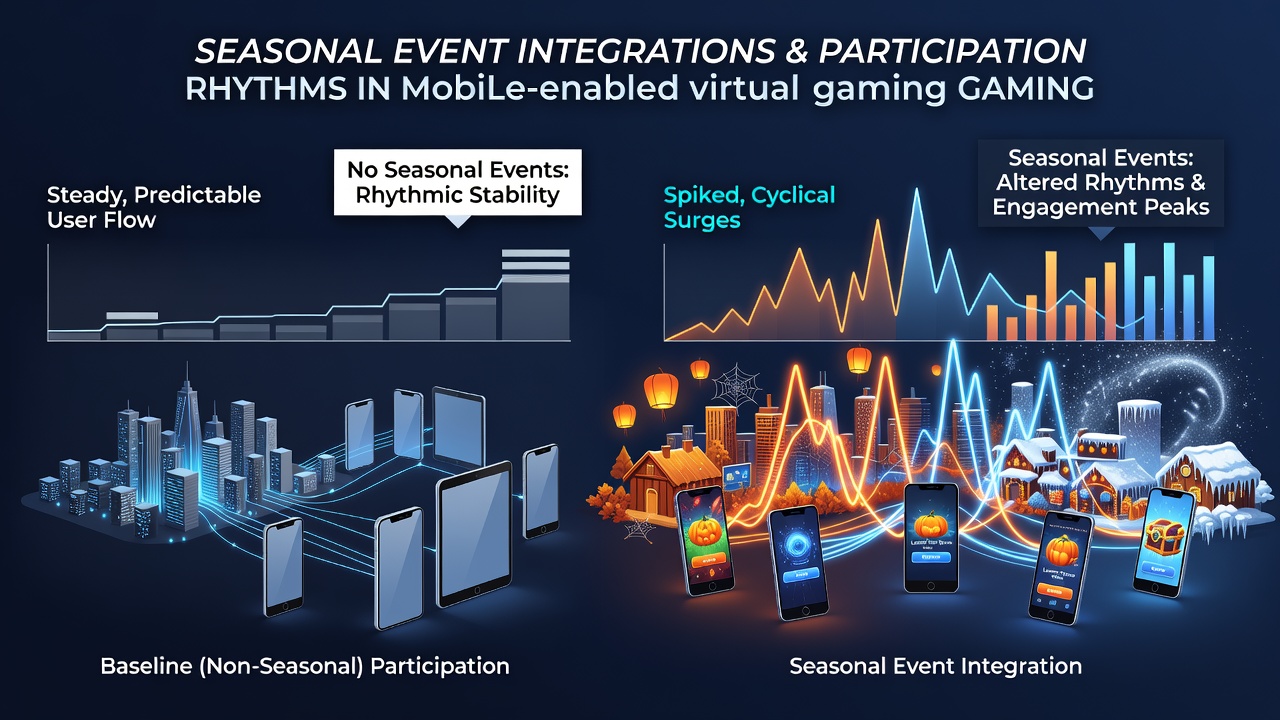
Seasonal event integrations in mobile-enabled virtual gaming spaces create structured periods of heightened activity that reshape when and how players log in, interact, and sustain their presence across digital environments, and these changes appear consistently across multiple game genres and regions according to industry tracking data. Developers introduce time-limited modes, exclusive rewards, and themed content tied to holidays or cultural moments, which in turn compress or extend typical session lengths while shifting peak usage hours away from standard evening patterns toward more fragmented daytime intervals on portable devices.
Core Mechanisms Driving Participation Changes
Event frameworks operate through layered incentive structures that reward repeated logins over short windows, and this design encourages players to align their routines with event calendars rather than personal schedules alone, since data from multiple tracking platforms shows login clusters forming around midday and late afternoon during summer festivals. Mobile platforms amplify these effects because users carry devices throughout the day, allowing brief check-ins that accumulate progress toward event goals without requiring extended stationary sessions, whereas traditional desktop patterns once dominated longer evening blocks. Researchers have documented how these integrations produce measurable deviations in weekly participation curves, with mid-week dips flattening as players spread activity to capture daily bonuses that reset at consistent intervals.
Observed Shifts in Daily and Weekly Rhythms
Participation rhythms evolve when events overlap with real-world calendars, producing spikes that begin several days before official start dates as anticipation builds through teaser notifications, and figures from aggregated app analytics reveal sustained elevation lasting one to two weeks after events conclude because residual rewards and leaderboard positions keep users returning. In July 2026, several major titles launched overlapping summer celebration events that coincided with school holidays in multiple countries, resulting in documented increases in morning logins among younger demographics and extended afternoon sessions among adult users who accessed games during commutes or breaks. These patterns differ from baseline months where activity concentrated more narrowly between 6 PM and 10 PM local time, demonstrating how seasonal overlays redistribute load across 24-hour cycles.
Mobile Accessibility and Fragmented Engagement
Portable formats enable participation rhythms that fragment into multiple short bursts rather than single prolonged visits, and this fragmentation becomes especially pronounced during events because push notifications and progress trackers prompt quick returns throughout the day. Observers note that players often complete daily objectives in three to five minute intervals while traveling or between other tasks, creating a rhythm of micro-sessions that accumulate substantial total playtime yet register differently in engagement metrics than pre-event norms. Such patterns appear across diverse regions, with data indicating similar compression of session duration in both North American and Asia-Pacific markets when comparable seasonal content rolls out simultaneously.
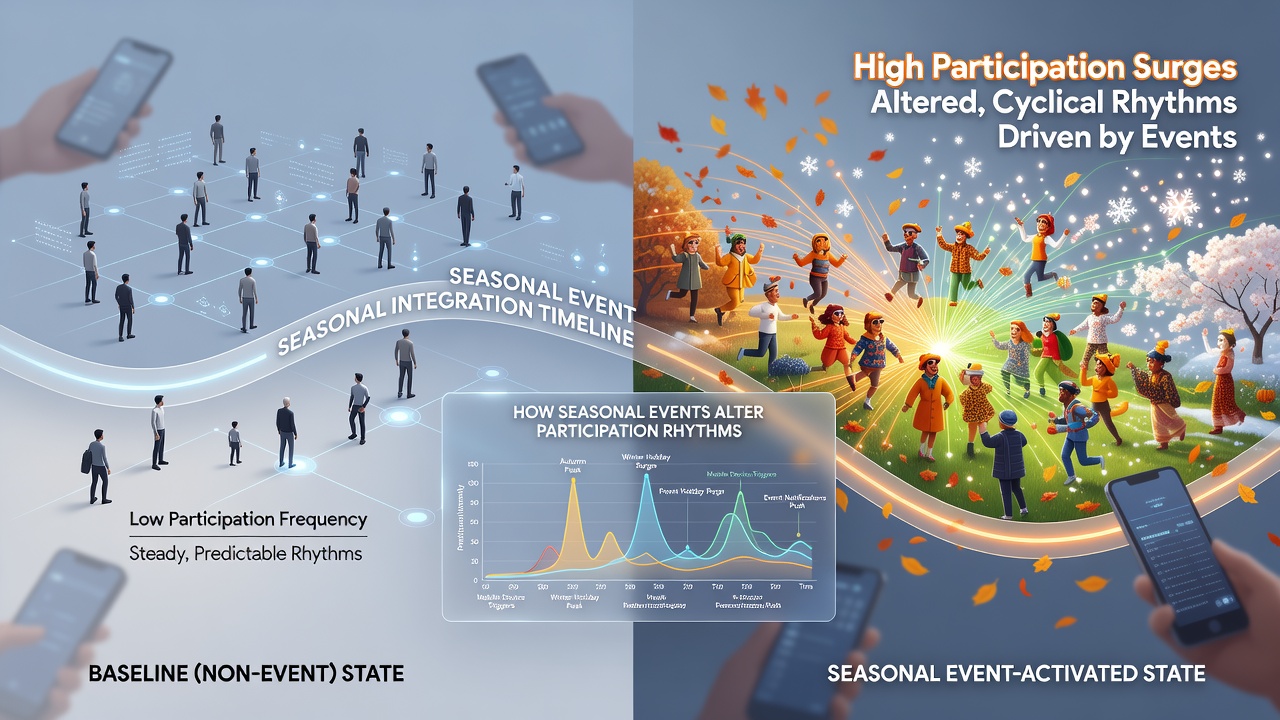
Regional and Demographic Variations in Response
Responses to the same event type vary by demographic and geography because cultural familiarity with seasonal themes influences how readily players adopt new rhythms, and studies compiled by the Entertainment Software Association highlight stronger midday participation lifts in markets where summer festivals carry local significance. Older player cohorts tend to maintain more consistent evening access even during events, while younger groups exhibit greater flexibility that incorporates daytime mobile engagement, according to usage breakdowns released through industry reports. These demographic splits produce layered participation waves rather than uniform spikes, allowing developers to predict server loads with greater precision when they segment data by age and location.
Longer-Term Effects on Sustained Patterns
Repeated seasonal integrations gradually recalibrate baseline expectations, and players begin anticipating event-driven rhythm changes as part of normal cycles, which in turn reduces the novelty effect over successive years while maintaining elevated overall activity compared to non-event periods. Longitudinal tracking conducted by research groups such as those affiliated with the Interactive Games and Entertainment Association shows that games incorporating annual event schedules experience less pronounced post-event drop-offs than titles without such structures, because users internalize the recurring calendar and plan around it. Mobile ecosystems benefit particularly from this conditioning since notification systems reinforce the rhythm year after year.
Conclusion
Seasonal event integrations function as reliable modulators of participation rhythms in mobile-enabled virtual gaming spaces by redistributing activity across different times of day and altering session structures, and the cumulative evidence from multiple data sources confirms these shifts occur consistently across genres and regions. The patterns observed in July 2026 and similar periods illustrate how event calendars interact with mobile accessibility to produce sustained changes in when and how users engage, providing developers with predictable tools for managing community activity over time.