Mapping Pathways from Signup Incentives to Enduring Engagement Patterns in Digital Gambling Platforms
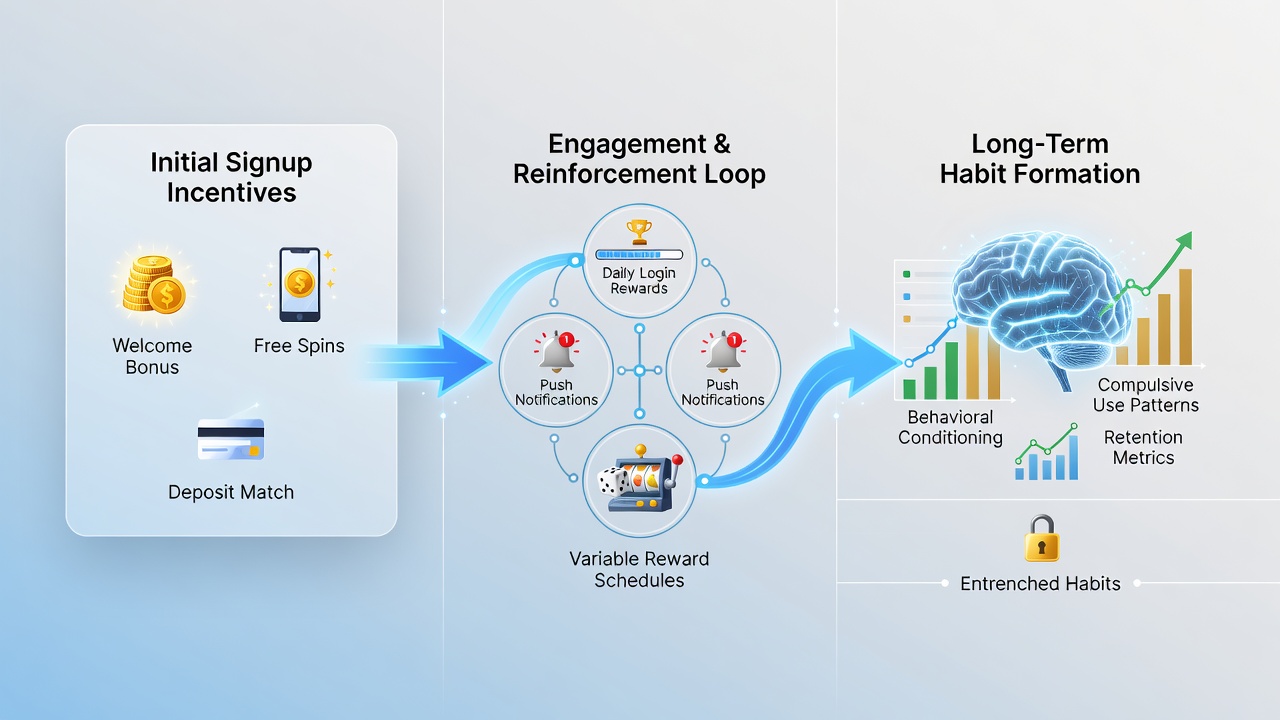 Research indicates that digital gambling applications employ structured sequences beginning with signup incentives, and these sequences progress through repeated reward cycles toward established user routines. Data from industry tracking systems show welcome bonuses, deposit matches, and free spin allocations serve as entry points that draw new accounts in July 2026, while subsequent layers of personalized offers maintain activity levels over extended periods.
Entry Mechanisms and First-Contact Rewards
Signup incentives typically include matched deposits up to fixed amounts alongside no-deposit free credits, and operators distribute these offers through targeted email campaigns and affiliate networks. Figures reveal conversion rates from registration to initial deposit often exceed 40 percent when bonus structures align with popular game categories such as slots and live dealer tables. Observers note that timing plays a role because many platforms activate these rewards immediately upon verification, which reduces drop-off during the onboarding phase.
Payment method selections at this stage influence later participation because certain funding channels unlock additional bonus tiers or faster withdrawal processing. Studies from academic institutions demonstrate that users who select e-wallets during signup tend to complete more transactions within the first week compared with those using bank transfers.
Transition from One-Time Offers to Ongoing Reward Loops
Once initial incentives expire, adaptive systems shift users toward loyalty programs that track play volume and adjust reward frequency accordingly. These programs rely on point accumulation models where continued spins or table sessions unlock tiered benefits including cashback percentages and exclusive tournament entries. Evidence suggests reinforcement schedules become more variable at this stage, and such variability correlates with extended session durations across multiple sessions.
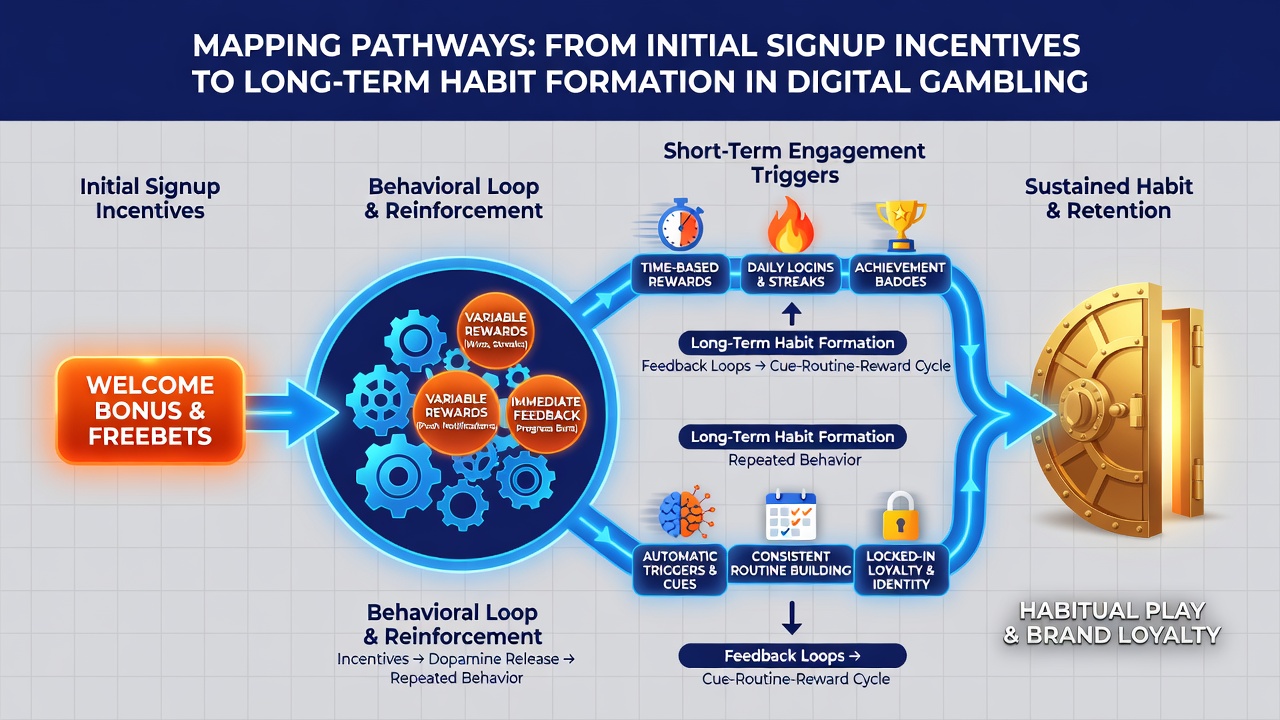
Algorithms analyze behavioral signals such as game selection, bet sizing, and login times to refine future promotions, and this refinement occurs in near real time. Reports from the Australian Gambling Research Centre indicate that users receiving tailored reload bonuses demonstrate higher retention rates at the 30-day mark than those exposed only to generic offers. The process creates feedback loops because each completed session generates fresh data points that inform the next incentive layer.
Data Patterns and Retention Metrics
Platform analytics track metrics including daily active users, average revenue per user, and session length, while these metrics feed back into habit formation models. Research conducted across North American and European markets shows that users who engage with live dealer formats after initial slot incentives often maintain activity longer than single-category participants. Funding channel choices continue to matter here because instant deposit options reduce friction during peak engagement windows.
Cross-border data privacy regulations shape how much personalization operators can apply, yet many jurisdictions permit behavioral tracking when users consent during registration. Canadian provincial gaming authorities have documented similar patterns where reward personalization correlates with sustained participation without violating provincial guidelines.
Long-Term Habit Formation Indicators
Habit formation emerges when users transition from responding to external prompts to initiating sessions independently, and this shift appears in login frequency data that stabilizes around consistent weekly patterns. Longitudinal tracking reveals that approximately one in five users who begin with signup incentives reach this autonomous stage within six months, according to aggregated industry reports. Neural mapping tools employed by some developers further refine choice sequences by identifying preferred game mechanics and timing preferences.
Security protocols that verify identity and monitor transaction flows contribute to trust dynamics, and these protocols indirectly support habit continuity by minimizing account disruptions. Observers note that platforms incorporating progressive security layers alongside reward systems record lower churn rates during the critical 90-day window after signup.
Conclusion
The pathway from signup incentives to long-term engagement follows measurable stages that operators refine through data collection and algorithmic adjustment. Initial rewards secure first contact while ongoing structures reinforce repeated behavior, and these elements combine to shape participation patterns across digital gambling applications. Continued monitoring by regulatory bodies and research organizations provides updated figures on how these sequences evolve in response to technological and policy changes.